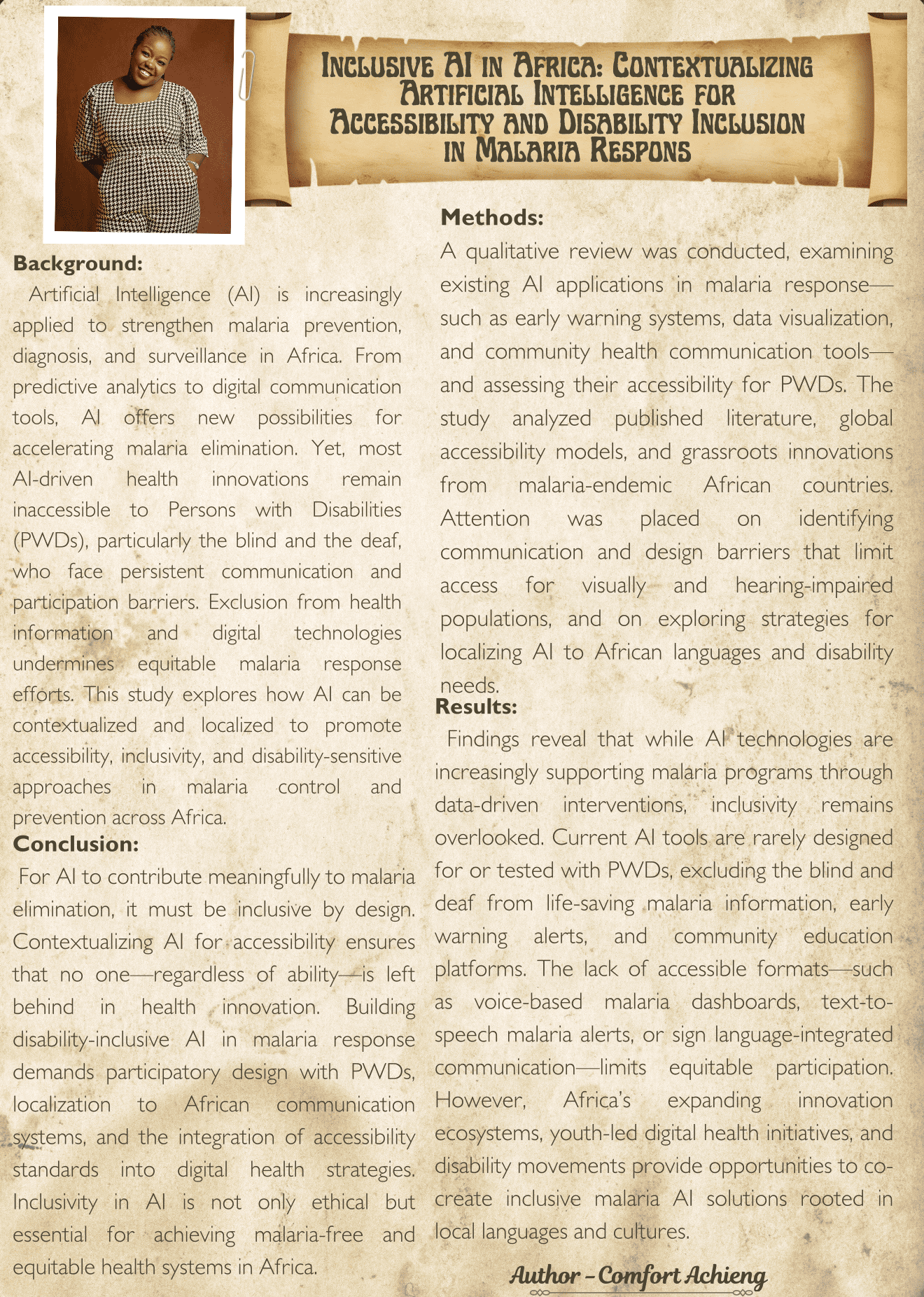
Inclusive AI in Africa: Contextualizing Artificial Intelligence for Accessibility and Disability Inclusion in Malaria Respons
Background:
Artificial Intelligence (AI) is increasingly applied to strengthen malaria prevention, diagnosis, and surveillance in Africa. From predictive analytics to digital communication tools, AI offers new possibilities for accelerating malaria elimination. Yet, most AI-driven health innovations remain inaccessible to Persons with Disabilities (PWDs), particularly the blind and the deaf, who face persistent communication and participation barriers. Exclusion from health information and digital technologies undermines equitable malaria response efforts. This study explores how AI can be contextualized and localized to promote accessibility, inclusivity, and disability-sensitive approaches in malaria control and prevention across Africa.
Keywords: Localization and Contextualization of AI in Healthcare
Gallery